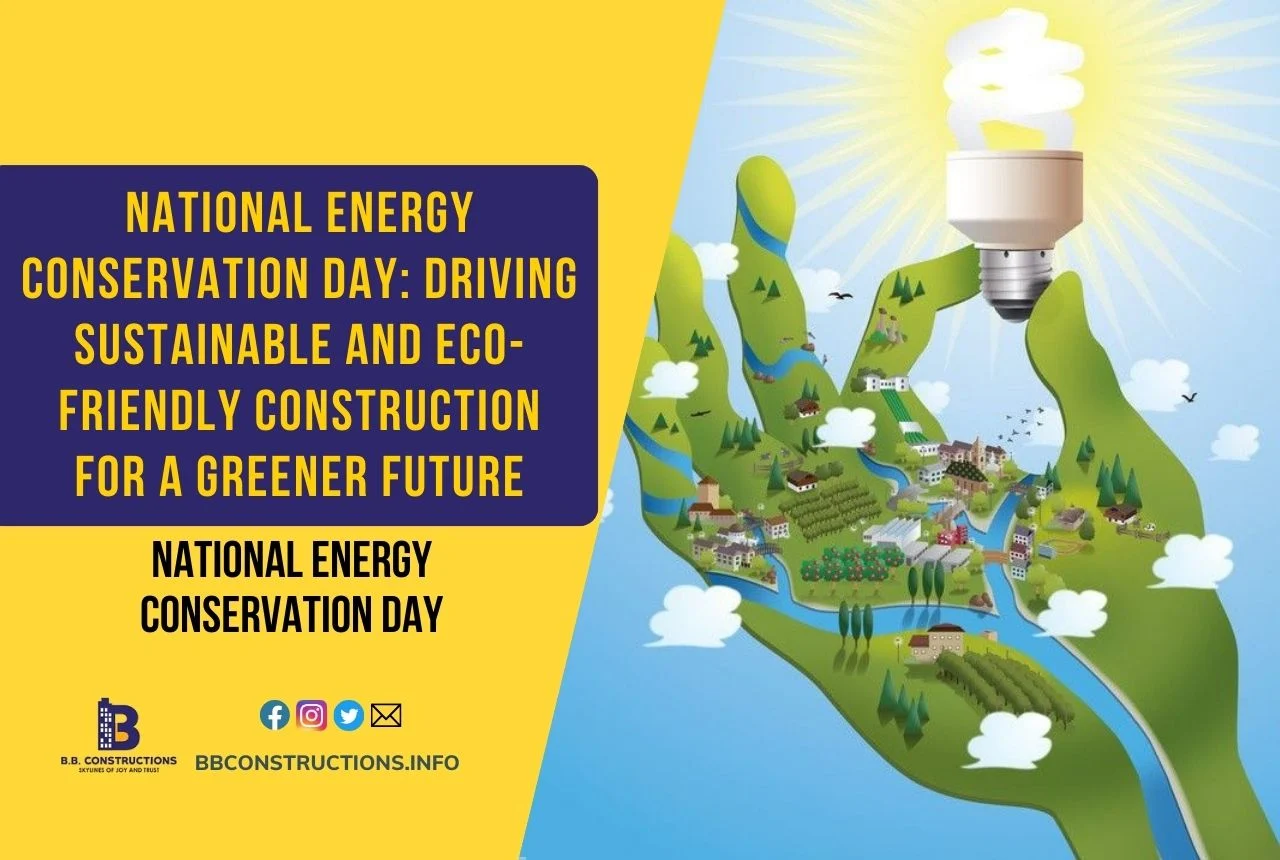

Explore National Energy Conservation Day with B.B Construction. Discover energy-efficient homes, sustainable construction techniques, and eco-friendly real estate solutions for a greener, cost-effective future.
In an era where energy consumption is rapidly increasing, conserving energy has become a global priority. The construction and real estate industry, in particular, has a significant role to play in this effort. Observed annually on December 14th, National Energy Conservation Day reminds individuals, businesses, and industries to adopt energy-efficient practices.
For real estate developers like B.B Construction, it underscores a commitment to sustainable building practices that minimize environmental impact while providing high-quality, energy-efficient homes. The modern real estate landscape is no longer just about aesthetics, location, or size; buyers increasingly prioritize sustainability, long-term cost savings, and energy efficiency. Energy-efficient homes are designed to optimize power consumption without compromising comfort or functionality, which translates into lower electricity bills, reduced reliance on non-renewable energy, and a significantly smaller carbon footprint.
Energy conservation in construction is not limited to the installation of solar panels or energy-saving appliances. It begins with careful planning and design, selecting sustainable materials, and adopting innovative building techniques. Thoughtful architectural design can harness natural light, improve ventilation, and maintain comfortable indoor temperatures, thereby reducing the need for artificial lighting, heating, or cooling. Incorporating water-efficient systems, such as rainwater harvesting and wastewater recycling, further enhances sustainability while reducing the energy required for water processing and distribution.
Moreover, the growing awareness around environmental preservation has led governments and regulatory authorities to introduce standards, incentives, and certifications for green construction. Real estate developers who embrace these standards not only comply with regulations but also build trust with environmentally conscious clients. For companies like B.B Construction, sustainable construction is a long-term vision that aligns profitability with responsibility, ensuring that communities benefit from eco-friendly, technologically advanced, and energy-efficient living spaces.
By adopting these practices, B.B Construction demonstrates that energy conservation is more than a compliance requirement—it is a strategic approach to creating resilient, cost-effective, and environmentally responsible homes that meet the expectations of modern buyers while contributing to a greener, healthier planet.
Understanding National Energy Conservation Day
National Energy Conservation Day was established by the Ministry of Power, Government of India, to promote awareness about energy efficiency. The day encourages energy-saving practices across all sectors, including construction, manufacturing, and residential living.
The core objective is to inspire responsible energy usage, reduce wastage, and implement solutions that protect natural resources. In construction, this translates to designing buildings that consume less energy, utilize renewable sources, and uphold eco-friendly standards—all while maintaining comfort, functionality, and aesthetic appeal.
Why Energy Conservation is Critical in Construction
The construction industry is one of the largest consumers of energy globally. From manufacturing building materials to operating machinery and powering completed structures, construction accounts for a significant share of energy usage and greenhouse gas emissions. According to global studies, buildings and construction together contribute nearly 40% of energy-related carbon dioxide emissions.
Traditional construction methods rely on energy-intensive materials such as cement, steel, and conventional bricks. As urbanization accelerates, these practices have a compounding effect on the environment. Energy-efficient construction is not only environmentally responsible but also economically advantageous, offering cost savings, higher property value, and improved comfort for occupants.
Key Strategies for Eco-Friendly Construction
Modern construction is evolving to prioritize energy efficiency and sustainability. Here are some practices that forward-thinking developers implement to align with National Energy Conservation Day principles:
1. Sustainable Building Materials
Selecting materials with low energy footprints can drastically reduce environmental impact. Examples include:
- Fly Ash Bricks: Made from industrial waste, reducing the need for clay.
- Recycled Steel: Cuts energy usage in production and lowers emissions.
- Bamboo and Timber: Renewable, durable, and environmentally friendly alternatives.
- Low-VOC Paints and Finishes: Improve indoor air quality and minimize harmful emissions.
2. Energy-Efficient Architectural Design
Architectural planning is crucial for energy conservation. Effective strategies include:
- Optimal Building Orientation: Maximizes natural sunlight and reduces heating/cooling needs.
- Natural Ventilation: Decreases reliance on air conditioning.
- Daylighting: Large windows and skylights reduce the need for artificial lighting.
- Insulation: Proper wall, floor, and roof insulation reduces heating and cooling energy consumption.
3. Renewable Energy Integration
Integrating renewable energy in construction projects reduces dependency on non-renewable sources:
- Solar Panels: Rooftop solar systems can supply electricity for homes and commercial spaces.
- Wind Energy: In suitable locations, small-scale wind turbines can complement grid energy.
- Geothermal Systems: Efficient heating and cooling with minimal energy consumption.
4. Water-Efficient Systems
Water and energy conservation go hand-in-hand. Methods include:
- Rainwater Harvesting: Captures rainwater for irrigation and non-potable uses.
- Low-Flow Fixtures: Reduce water and energy usage.
- Wastewater Recycling: Treats and reuses water for landscaping or non-drinking purposes.
5. Smart Home and Automation Technologies
Modern buildings equipped with smart systems optimize energy use automatically:
- Motion-sensor lighting
- Automated HVAC and thermostats
- Energy management dashboards
6. Waste Reduction and Recycling
Construction generates significant waste. Recycling, efficient planning, and prefabrication reduce energy consumption related to material production and disposal.
The Advantages of Energy-Efficient Construction
Integrating energy conservation in construction projects provides multiple benefits:
- Cost Efficiency: Reduced electricity and water bills save money in the long term.
- Environmental Protection: Lower energy consumption leads to fewer carbon emissions.
- Enhanced Comfort: Improved indoor air quality, lighting, and temperature control.
- Higher Property Value: Energy-efficient homes are highly desirable in the market.
- Regulatory Compliance: Sustainable buildings meet environmental and building standards, benefiting from incentives and certifications.
How B.B Construction Leads Sustainable Practices
B.B Construction is committed to sustainable, energy-efficient construction practices. By focusing on eco-friendly materials, renewable energy integration, and smart architectural design, the company ensures that every project reflects a balance between modern living and environmental responsibility.
Instead of limiting efforts to symbolic recognition of National Energy Conservation Day, B.B Construction embeds sustainability in every stage of construction—from planning and design to execution and post-occupancy. This long-term approach positions the company as a leader in environmentally conscious real estate development.
Broader Implications of Energy Conservation
Energy conservation in construction is not just about individual buildings. It has far-reaching implications:
- Climate Change Mitigation: Reduced energy consumption contributes to lower carbon emissions.
- Resource Preservation: Efficient material and energy use ensures sustainable resources for the future.
- Community Well-Being: Cleaner, energy-efficient buildings improve quality of life.
- Economic Growth: Green construction stimulates innovation and attracts eco-conscious investors.
Final Thoughts
National Energy Conservation Day serves as an important reminder that energy efficiency is vital for a sustainable future. The construction and real estate industries have a responsibility to implement energy-saving practices, reduce environmental impact, and create homes that are both modern and sustainable.
B.B Construction exemplifies this commitment by prioritizing energy-efficient design, sustainable materials, and smart technologies in all projects. By adopting eco-friendly construction methods, the company ensures that every home it builds contributes to a greener, healthier, and more cost-effective future for its residents.
Sustainable construction is no longer just an option—it is the foundation of responsible development, and with conscious efforts, the vision of energy-efficient, eco-friendly homes can become a reality for generations to come.