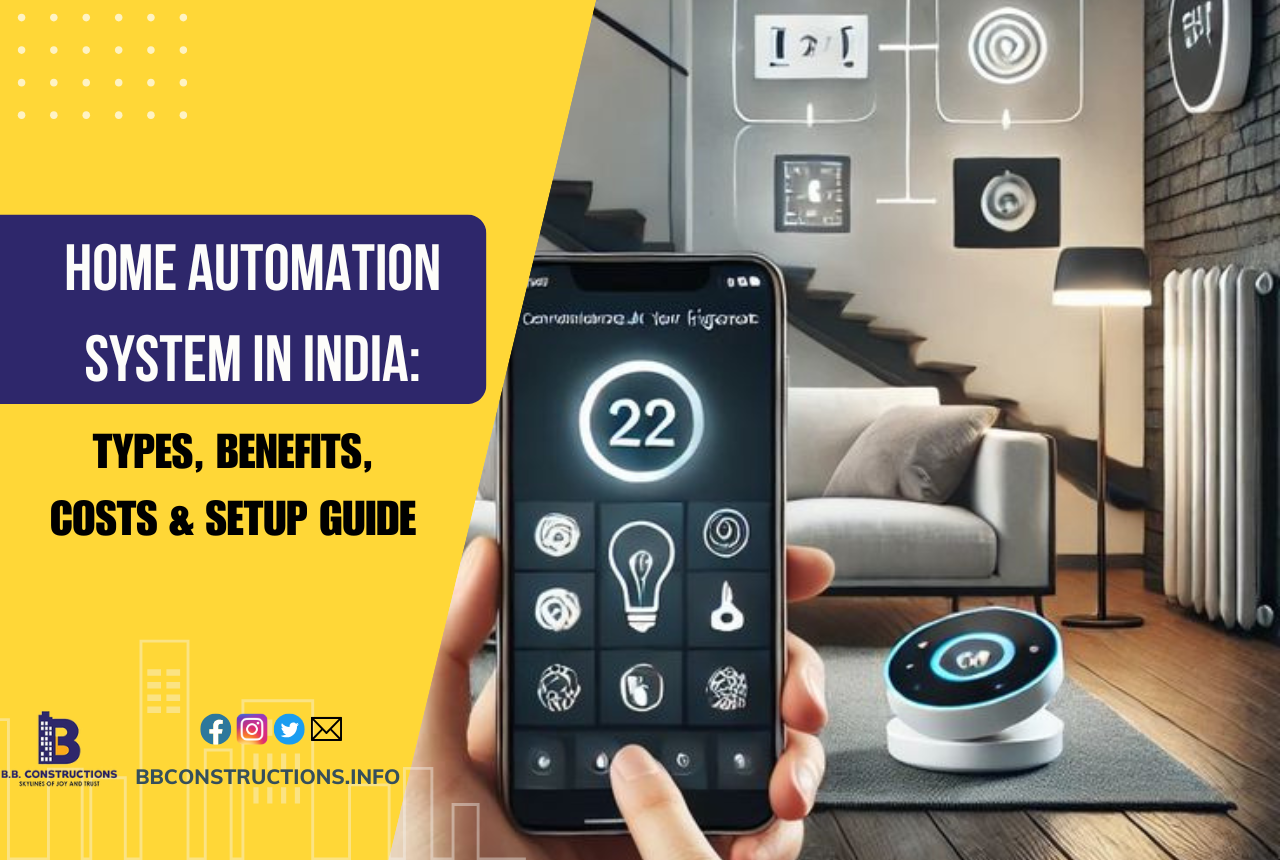

Imagine walking into your apartment and having the lights adjust automatically, the air conditioner already set to your preferred temperature, and your security cameras armed — all before you even touch a switch. This is not a scene from a science fiction movie; it is the everyday reality that a home automation system delivers.
As Guwahati grows into a modern urban hub, homebuyers and property investors are increasingly asking one question when they evaluate a new apartment: Does it support a smart home automation system? At BB Constructions, we build residences that are future-ready — and understanding home automation is the first step toward making the most of your investment.
This comprehensive guide answers everything you need to know — what a home automation system is, the different types available today, their benefits, costs, and how to choose the right one for your BB Constructions home.
What Is a Home Automation System?
A home automation system — also known as a smart home system or domotics — is a network of internet-connected devices that can be monitored and controlled remotely or programmed to operate automatically. These devices communicate with each other and with a central hub (or the cloud) using wireless protocols like Wi-Fi, Zigbee, Z-Wave, or Bluetooth.
In simple terms, a home automation system lets you control your home’s functions — lights, fans, locks, cameras, appliances, and more — from a single app on your smartphone, a voice assistant, or through pre-set schedules and triggers.
Core Components of a Home Automation System
- Smart Hub / Controller: The brain of the system; connects and coordinates all devices.
- Sensors & Detectors: Motion sensors, door/window sensors, smoke detectors, leak sensors.
- Smart Lighting: LED bulbs and switches that can be dimmed, scheduled, or colour-changed.
- Smart Climate Control: Smart ACs, fans, and thermostats that optimise energy use.
- Smart Security: Video doorbells, IP cameras, smart locks, and alarm systems.
- Smart Appliances: Wi-Fi-enabled TVs, washing machines, geysers, and more.
- Voice Assistants: Amazon Alexa, Google Assistant, or Apple Siri integration.
Types of Home Automation Systems
Understanding the types of home automation systems helps you choose the right setup for your apartment, budget, and lifestyle.
1. Monitored Home Automation Systems
These systems are connected to a professional monitoring service that watches over your home 24/7. If a sensor is triggered — say, a smoke alarm or an intrusion alert — the monitoring centre contacts you and, if needed, emergency services. This type is best for homeowners who prioritise security and peace of mind, particularly when travelling.
2. Unmonitored Home Automation Systems
Unmonitored systems notify the homeowner directly via app notifications, alarms, or SMS. There is no third-party service involved. These are more affordable and are popular in Indian urban apartments where residents or building security can respond quickly. BB Constructions projects are designed to accommodate unmonitored smart setups out of the box.
3. Wired Home Automation Systems
Wired systems use physical cables (such as Cat6 or KNX bus cables) to connect devices. They are highly reliable, not subject to wireless interference, and are typically installed during construction. These are ideal for large homes or premium apartments where infrastructure can be pre-built during the construction phase — exactly the planning advantage that BB Constructions offers its buyers.
4. Wireless Home Automation Systems
Wireless systems use Wi-Fi, Zigbee, Z-Wave, or Bluetooth to communicate. They are easier to install and retrofit into existing homes without heavy civil work. Most consumer-grade smart home devices in India — from Alexa-compatible switches to Xiaomi cameras — use wireless protocols. The flexibility and low installation cost make this the most popular type among apartment owners in Guwahati today.
5. Integrated Smart Home Systems
An integrated system combines security, lighting, climate, entertainment, and energy management into one unified platform controlled through a single app or panel. Brands like Control4, Crestron, and HomeMatic offer premium integrated solutions, while Indian brands like Oakter and Wiz provide cost-effective alternatives. Integrated systems represent the gold standard for smart living and add significant resale value to a property.
Benefits of a Home Automation System
| Benefit | What It Means for You |
| Convenience | Control all devices from one app — anytime, anywhere. |
| Energy Savings | Smart scheduling and sensors can reduce electricity bills by 20–30%. |
| Enhanced Security | Real-time alerts, remote camera access, and smart locks keep your family safe. |
| Comfort | Pre-set scenes like ‘Movie Mode’ or ‘Good Morning’ to match your lifestyle. |
| Accessibility | Voice or app control helps elderly and differently-abled residents. |
| Higher Resale Value | Smart homes command a 5–15% price premium in today’s property market. |
| Remote Monitoring | Check on your home from anywhere in the world via smartphone. |
How to Choose the Right Home Automation System
With so many options available, choosing the right home automation system can feel overwhelming. Here is a practical, step-by-step approach:
- Define Your Goals: Start by deciding what problems you want to solve — security, energy saving, convenience, or all three. This determines which devices and systems you actually need.
- Set a Budget: Entry-level wireless smart home kits in India start from ₹10,000–₹30,000. A comprehensive integrated system for a 3BHK apartment may cost ₹1,00,000–₹5,00,000 depending on the brand and scope.
- Choose a Protocol: Decide between Wi-Fi (easiest, no hub needed), Zigbee or Z-Wave (more reliable, needs a hub), or a wired KNX system (most robust, best for new construction).
- Pick an Ecosystem: Most smart devices align with Amazon Alexa, Google Home, or Apple HomeKit. Choose one ecosystem and stick to it for seamless compatibility.
- Check Compatibility: Ensure the smart devices you buy are compatible with Indian voltage standards (220–240V, 50Hz) and are available with local warranty support.
- Plan for Scalability: Start with one room or one use case (such as smart lighting), then expand. A well-designed system should allow you to add devices over time without replacing the entire setup.
- Hire a Certified Installer: For wired or integrated systems, always hire a certified smart home integrator. For wireless setups, many devices are DIY-friendly.
Home Automation in Guwahati: What Residents Need to Know
Guwahati is rapidly evolving as a Tier-1 real estate destination in Northeast India. With improved 4G/5G connectivity, rising disposable incomes, and a growing tech-savvy population, demand for smart homes in Guwahati has never been higher.
Local considerations when implementing a home automation system in Guwahati include:
- Power fluctuations: Invest in surge protectors or UPS units to protect smart devices from voltage spikes common in the region.
- High humidity: Choose devices with at least an IP44 rating for bathrooms and balcony areas.
- Internet dependency: Opt for systems with local control fallback (Zigbee/Z-Wave) so devices work even during internet outages.
- Security awareness: Smart locks and video doorbells are especially relevant given the preference for gated community living in Guwahati.
- Climate management: Smart ACs and ceiling fans are high-value upgrades given the hot, humid summers in Assam.
Why BB Constructions Homes Are Built Smart-Ready
At BB Constructions, we understand that your apartment is not just a place to live — it is a long-term investment and a reflection of your lifestyle. That is why we design and build our residential projects with smart-home readiness in mind.
- Pre-conduit infrastructure: Our apartments include conduit provisions for future wiring of smart systems.
- Structured cabling: Cat6 cabling provisions in premium units ensure faster, more reliable connectivity.
- Modular switchboards: Compatible with leading smart switch brands available in India.
- Fibre-optic readiness: High-speed internet provisions ensure your smart home devices operate smoothly.
- Dedicated electrical points: Planned placement of sockets and circuit breakers to support smart appliances without overloading.
Conclusion
A home automation system is no longer a luxury reserved for tech enthusiasts — it is fast becoming the standard expectation for anyone buying a new apartment in a modern Indian city. From smart lighting and climate control to integrated security and energy management, the right home automation system can transform how you live, save, and invest.
At BB Constructions, we are committed to delivering homes that match the aspirations of tomorrow’s homeowners. Our projects in Guwahati are built with the infrastructure, design, and quality to support your smart home journey — from day one.
Frequently Asked Questions (FAQs)
Q: What is a home automation system in simple terms?
A home automation system is a network of smart, internet-connected devices in your home that can be controlled remotely via a smartphone app or voice assistant — including lights, fans, ACs, locks, cameras, and appliances.
Q: What are the types of home automation systems?
The main types are: monitored systems (with 24/7 professional oversight), unmonitored systems (direct alerts to the homeowner), wired systems (cable-based, very reliable), wireless systems (Wi-Fi/Zigbee, easy to install), and integrated systems (all functions on one platform).
Q: Is home automation worth the investment in India?
Yes. Energy savings of 20–30%, enhanced security, and a demonstrated 5–15% premium on resale value make home automation a financially sound upgrade, especially in growing cities like Guwahati.
Q: How much does a basic home automation system cost in India?
A starter smart home kit (smart lights, a plug, and a basic camera) can cost ₹10,000–₹30,000. A full-home integrated system for a 3BHK typically ranges from ₹1,00,000 to ₹5,00,000+.
Q: Can I install a home automation system in my existing BB Constructions apartment?
Yes. Most wireless smart home devices are retrofit-friendly and require no major civil work. Our apartments are also pre-designed with compatible switchboard formats and internet infrastructure.
Q: Which is better — a wired or wireless home automation system?
Wired systems are more reliable and ideal when planned during construction. Wireless systems are easier to install in existing homes. For most apartment owners, a quality wireless system is the most practical and cost-effective choice.